
How Long Does a Custom Staircase Take?
Timeline and process, from first call to final finish
Quick answer: A custom staircase in Ontario takes 3 to 12 weeks from first call to final finish. Railing replacement runs 3 to 5 weeks, carpet-to-hardwood tread conversion 4 to 6 weeks, a full staircase renovation 6 to 10 weeks, and a new-build staircase 6 to 12 weeks. On-site installation is only 3 to 7 days of that — the rest is design, material lead times, and fabrication.
One of the first questions homeowners ask me when they are considering a custom staircase is: how long is this going to take? Whether you are renovating an existing staircase or including one in a new build, you need a realistic custom staircase timeline so you can plan around it — especially if you are coordinating other trades or living in the home during the work.
The honest answer is that it depends on the scope, but I can give you a clear breakdown of what to expect. I have been building custom staircases across Durham Region, Whitby, Brooklin, and the GTA for over 20 years, and the stair build process follows a consistent pattern regardless of the project size.
What You Will Learn
- The major phases of a custom staircase project from first call to final finish
- Realistic timelines for each stage
- What factors speed things up or slow things down
- How to plan your renovation schedule around a staircase build
Phase 1: Initial Consultation and Site Assessment (1–2 Weeks)
Every staircase project starts with a conversation. I visit the home, take measurements of the existing staircase or rough opening, and discuss what you are looking for — tread material, railing style, open or closed risers, and the overall look you want to achieve.
If you are working from architectural plans on a new build, I review those plans and flag any adjustments needed for the finishing details that architects sometimes leave vague — tread overhang, baluster spacing, newel post placement, and transitions at landings.
This phase typically takes one to two weeks, including the site visit, follow-up questions, and delivery of a detailed quote.
Phase 2: Design and Material Selection (1–3 Weeks)
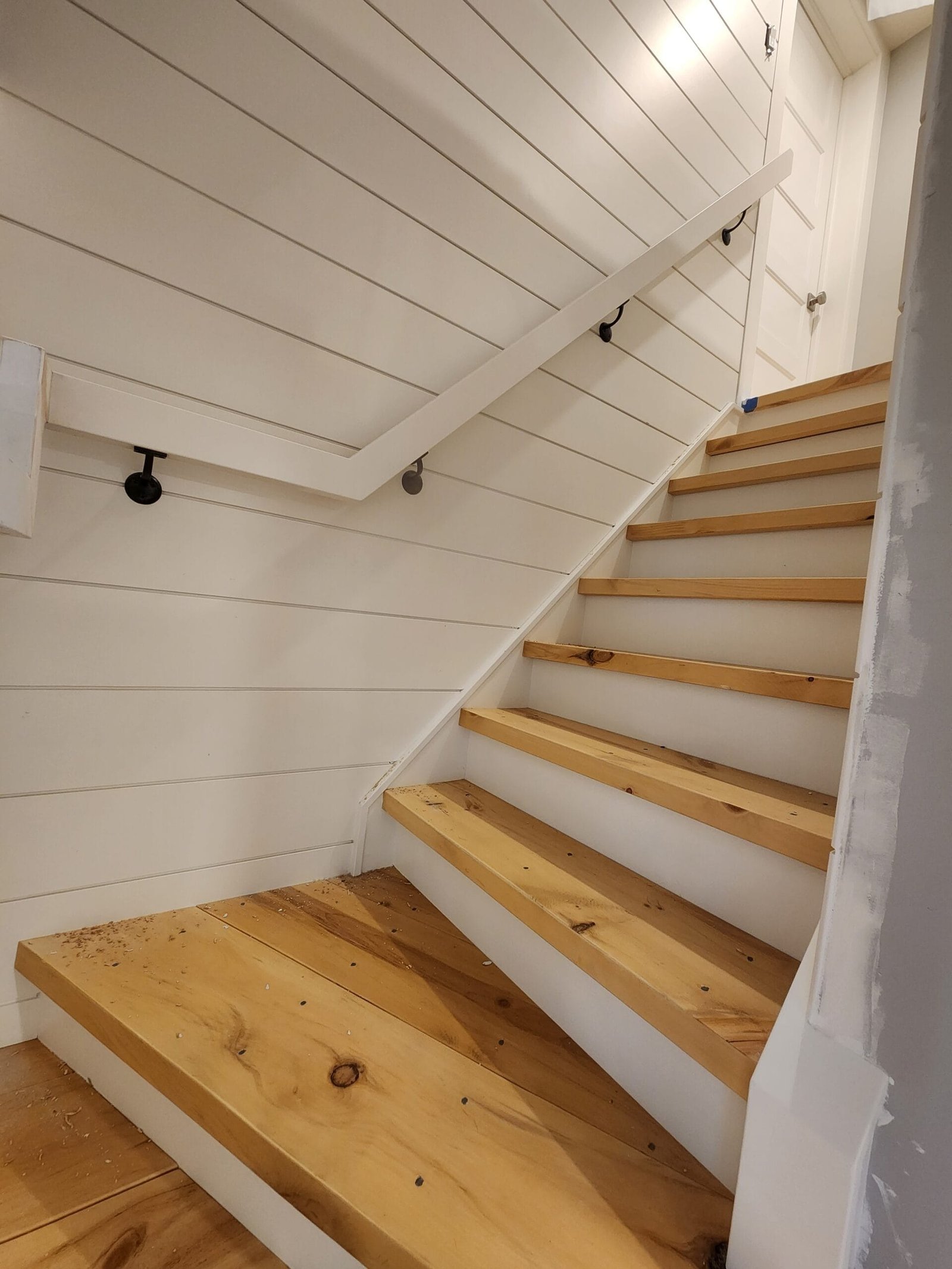
Once the quote is approved, we lock down the specifics. This is where you choose your tread species (red oak, white oak, maple, and ash are the most popular in Ontario), stain colour, railing components, and baluster style — whether that is traditional wood, wrought iron, cable, or glass.
Material lead times are the biggest variable in the custom staircase timeline at this stage. Standard hardwood treads are usually available within a week or two. Specialty materials — imported iron balusters, custom-milled newel posts, or glass panels — can take three to four weeks to arrive.
I always confirm material availability before finalizing the timeline so there are no surprises mid-project.
Phase 3: Fabrication and Preparation (1–2 Weeks)
This is the work that happens before I set foot on your staircase. Treads are cut to size, sanded, and pre-finished if we are using a factory finish. Skirt boards are templated and cut. Railing components are dry-fitted and adjusted.
For renovation projects, this phase also includes planning the demolition of existing carpet, treads, or railing systems. I figure out exactly what needs to come out and in what order so the installation phase goes smoothly.
Pre-fabrication is one of the reasons a dedicated finish carpenter can work faster on site — by the time installation day arrives, everything is ready to go.
Phase 4: Installation (3–7 Days On Site)
This is the phase most homeowners are curious about, because it is the one that directly affects your daily life. Here is what a typical on-site stair build process looks like:
Day 1–2: Demolition and prep. Removing old carpet, treads, balusters, and railing. Cleaning up the stringers, checking for level, and making any structural adjustments. On a new build, this step is shorter since the rough framing is already in place.
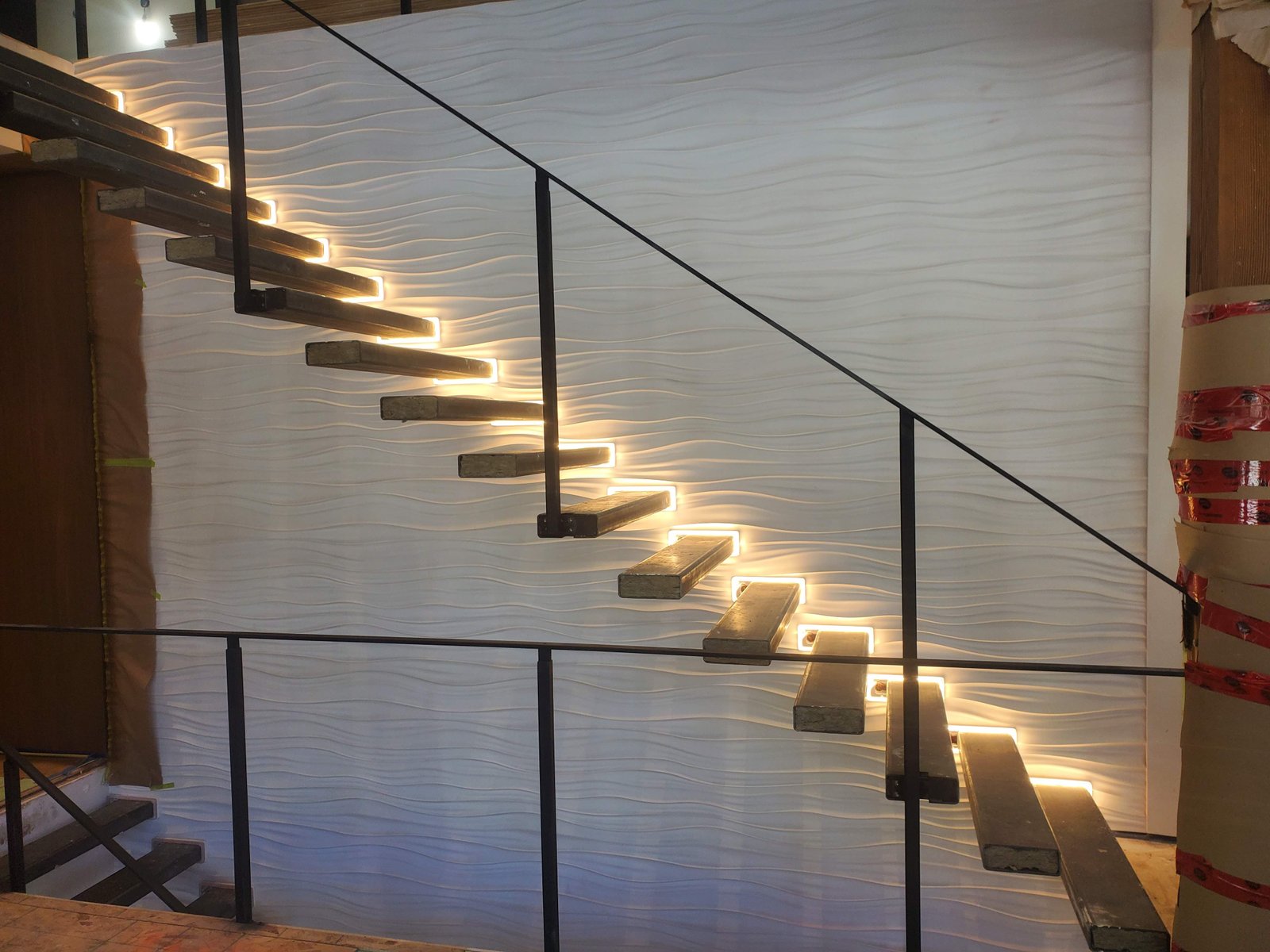
Day 2–4: Tread and riser installation. Each tread is custom-fitted to the stringer, shimmed for level, and secured. Risers go in alongside the treads. This is the most time-intensive part because every tread has to sit perfectly — a staircase with even one uneven tread is something you feel every time you use it.
Day 4–5: Railing, balusters, and newel posts. The railing system goes in once the treads are set. Balusters are spaced evenly, newel posts are anchored securely, and the handrail is shaped and fitted.
Day 5–7: Finishing and touch-up. Final sanding, stain application (if finishing on site), clear coat, and touch-up on any scuffs or marks from installation.
A straightforward carpet-to-hardwood tread conversion with a basic railing upgrade typically takes three to four days on site. A full custom staircase with a complex railing system, open risers, and multiple landings can take a full week.
Total Timeline: What to Expect
Here is a realistic end-to-end custom staircase timeline in Ontario:
| Project Type | Total Timeline (Start to Finish) |
|---|---|
| Carpet-to-hardwood tread conversion | 4–6 weeks |
| Railing replacement only | 3–5 weeks |
| Full staircase renovation | 6–10 weeks |
| New-build custom staircase | 6–12 weeks |
These timelines include consultation, material ordering, fabrication, and installation. The on-site work is always the shortest part — the preparation is what takes time, and that preparation is what makes the installation go smoothly.
What Can Slow Things Down?
Material delays. Specialty components from suppliers outside Ontario can add weeks. I mitigate this by confirming lead times before committing to a schedule.
Structural surprises. On renovation projects, sometimes the existing stringers need reinforcement or replacement once the old treads come off. This is not common, but it adds a day or two when it happens.
Coordination with other trades. If your staircase project is part of a larger renovation, the stair work needs to be sequenced with flooring, painting, and other finishing trades. Poor coordination between trades is one of the biggest timeline killers on renovation projects.
Decision delays. The faster you make your material and design selections, the faster I can order materials and get started. I always encourage homeowners to finalize their choices during the design phase rather than changing direction mid-project.
How to Plan Your Renovation Around a Staircase Build
If your staircase is part of a bigger renovation, here is my advice: start the staircase conversation early. Even if the actual installation is months away, getting the consultation and material selection done ahead of time means I can slot the on-site work into your renovation schedule without delaying other trades.
For homeowners living in the home during the work, the staircase will be partially unusable during installation. I always ensure safe access between floors throughout the project, but plan for some disruption over those three to seven days.
Ready to Start Planning Your Custom Staircase?
If you are a homeowner in Durham Region, Whitby, Brooklin, Oshawa, or anywhere in the GTA thinking about a custom staircase, the best time to start the conversation is now — even if the build is months away. Early planning means better material availability, a realistic schedule, and no rushed decisions.
Contact Dixon Custom Carpentry today for a free staircase consultation and timeline estimate.
Leave a Reply