
5 Signs It’s Time to Upgrade Your Builder-Grade Trim
When builder-basic finishes aren’t cutting it anymore
You moved into your new home and everything looked clean, fresh, and finished. But a few years in, you start to notice things. Gaps where the baseboard meets the floor. Trim that dents if you look at it the wrong way. Moulding profiles so thin and generic that every room feels like every other room.
If that sounds familiar, you are not alone. Thousands of homes across Durham Region, Whitby, Brooklin, Oshawa, and Ajax were built with builder-grade trim — the minimum required to call the house “finished.” Here are five signs it might be time for an upgrade.
1. You Can See Gaps Between the Trim and the Wall (or Floor)
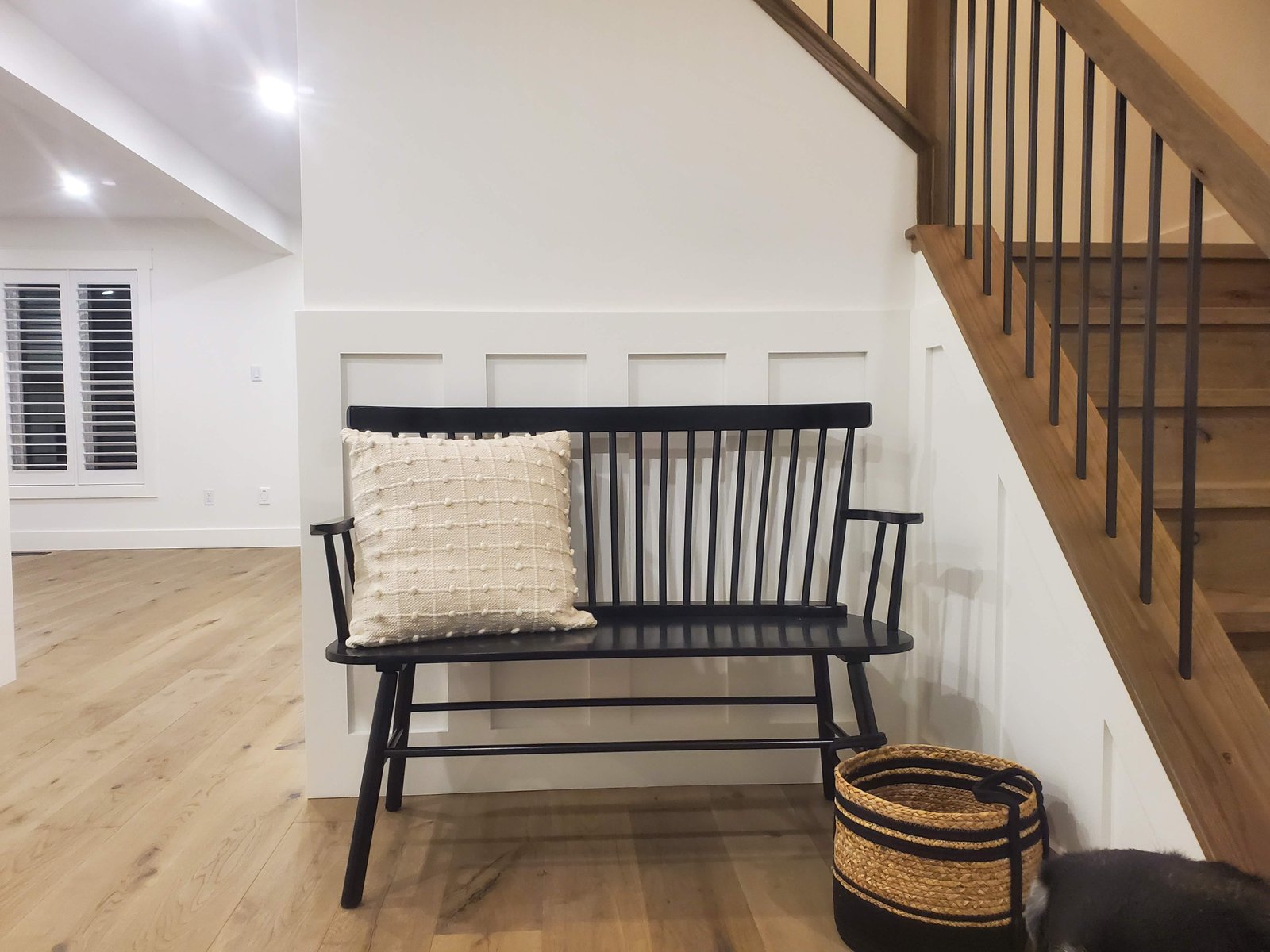
Builder-grade baseboard is typically thin, flat MDF in the 3-inch range. When a house settles — and every house settles — those thin baseboards do not have enough profile depth to hide the movement. Caulking helps temporarily, but it is a band-aid, not a fix.
What an upgrade looks like: Properly sized, thicker-profile baseboards (5.25 inches or taller) installed tight to the floor with professional scribing where needed.
2. Your Trim Dents, Chips, or Swells Easily
Most builder-grade trim is made from lightweight MDF. It is soft, vulnerable to moisture, and prone to swelling along bottom edges where it contacts damp floors.
What an upgrade looks like: Moisture-resistant MDF, primed poplar, or solid hardwood depending on the room. In wet areas, PVC or composite trim eliminates the moisture issue entirely.
3. Every Room in Your Home Looks the Same
Builder-grade trim uses one profile for everything. A formal living room should not feel the same as a hallway closet.
What an upgrade looks like: A coordinated trim package — taller baseboards and crown in main living areas, simpler profiles in secondary spaces, and detailed casing around key focal points.
4. Your Window and Door Casing Is Flat and Narrow
In many newer Ontario homes, window and door casing is a flat piece of 2.5-inch MDF with no backband, no header, and no detail.
What an upgrade looks like: Wider casing (3.5 inches or more), a backband edge for depth, or a traditional header and rosette detail for a more classic look.
5. You Have No Crown Molding (or It Is Barely There)
Many production homes in Durham Region ship with no crown molding at all. Crown molding is the single most impactful trim element in a room.
What an upgrade looks like: A properly scaled crown molding — typically 4.5 to 6 inches in rooms with 9-foot ceilings — installed by a finish carpenter who can handle the angle work and corner transitions.
The Transformation Is Real
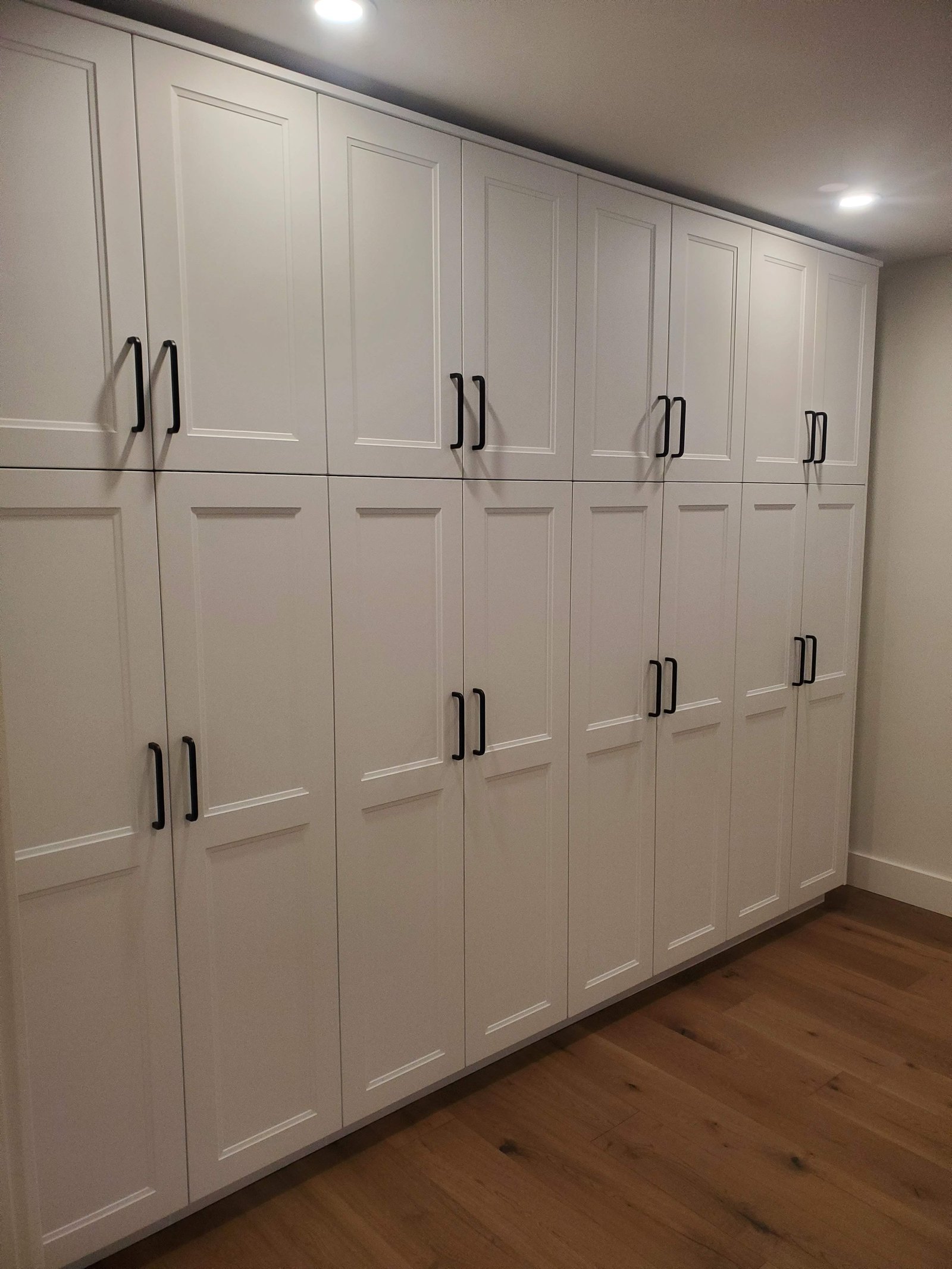
A trim upgrade does not require demolition, dust screens, or weeks of disruption. (For a detailed breakdown of what custom trim work costs, see my 2026 trim pricing guide.) In most cases, I can upgrade the trim in a main floor living area in a matter of days. It is one of the highest-impact, lowest-disruption renovations you can do — something the CMHC renovation guide highlights as well.
Ready to See What Custom Trim Can Do for Your Home?
If you are living with builder-grade trim in Whitby, Brooklin, Oshawa, Ajax, or anywhere in Durham Region and you are ready for an upgrade, I’d love to hear from you. I bring over 20 years of finishing carpentry experience to every project. Explore my custom trim work services to see what is possible.
Get in touch for a free consultation.
Common Questions About Trim Upgrades
What is builder-grade trim?
Builder-grade trim is the minimum-spec moulding installed in production-built homes. It is typically thin MDF baseboard (around 3 inches), flat narrow casing, and little to no crown moulding. It is designed to be inexpensive and fast to install rather than durable or visually impressive.
Can you upgrade trim without a full renovation?
Absolutely. A trim upgrade is one of the lowest-disruption renovations you can do. A finish carpenter can replace the baseboards, casing, and crown moulding in a main floor living area in just a few days, with no demolition or dust screens required.
How much does it cost to replace builder-grade trim?
A single-room trim upgrade costs $800–$2,500. A full main floor (baseboards, casing, and crown) typically runs $5,000–$15,000 depending on material choice and profile complexity. See our full pricing guide for detailed breakdowns.
Leave a Reply